Tea Saar - Building a Traceable Marketplace for Non-Technical Sellers

Sellers
Non-technical, intimidated by digital tools
Dependent on intermediaries
Low margins, low visibility
2
Buyers
Cannot verify product origin
Lack trust in quality
Experience generic, commoditized listings
Problem

Core Insight
The problem is not “selling tea online.”
It’s translating a trust-based offline system into a digital experience.
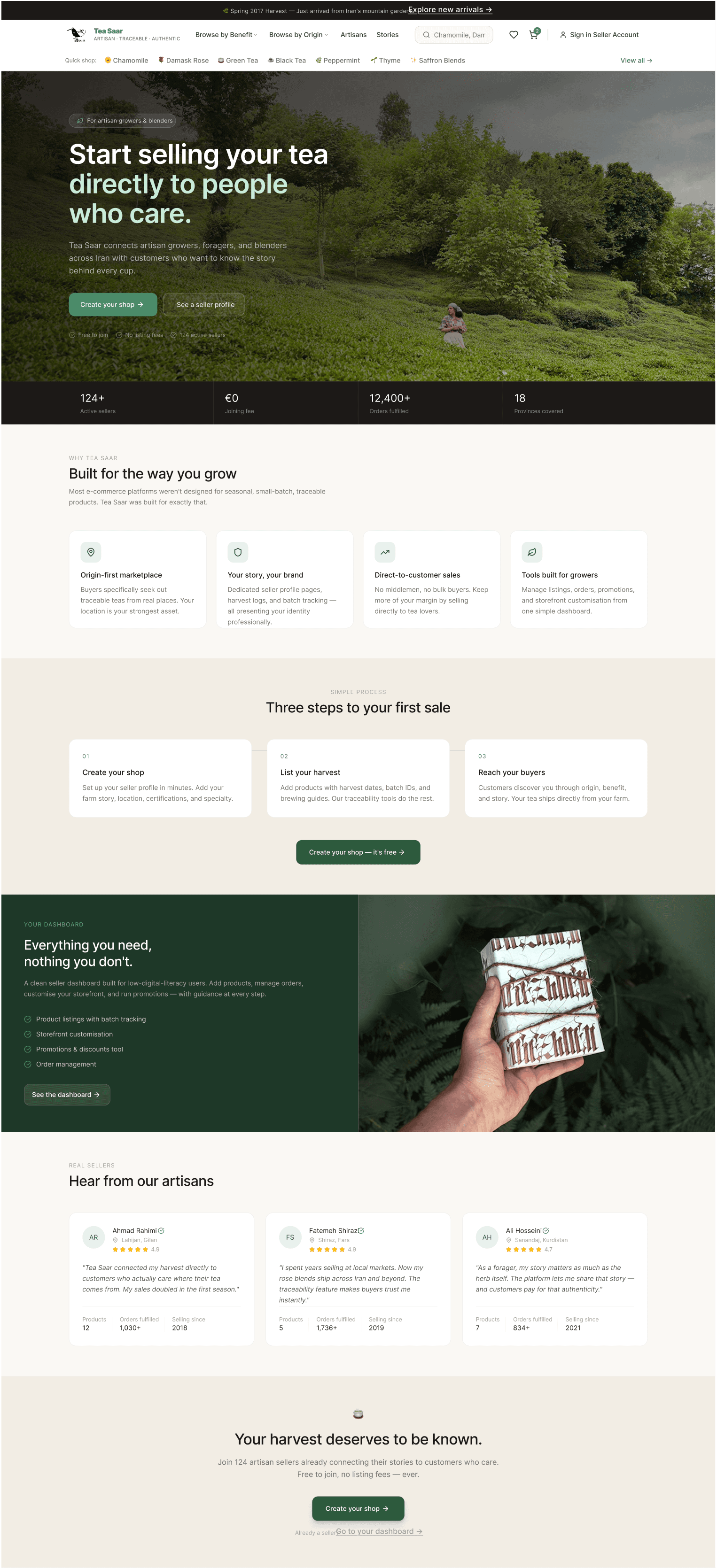
Home Page of the Tea marketplace
Context
In Iran, herbal tea is traditionally sold in the bazaar, organized into Raaste (corridors), where each category has a clear place.
This system is:
intuitive
trust-based
socially embedded
Modern marketplaces ignore this.
Designing for a Two-Sided Marketplace
Customer Experience
Goal: discovery + trust
Key features:
Browse by benefit (Sleep, Energy, Digestion)
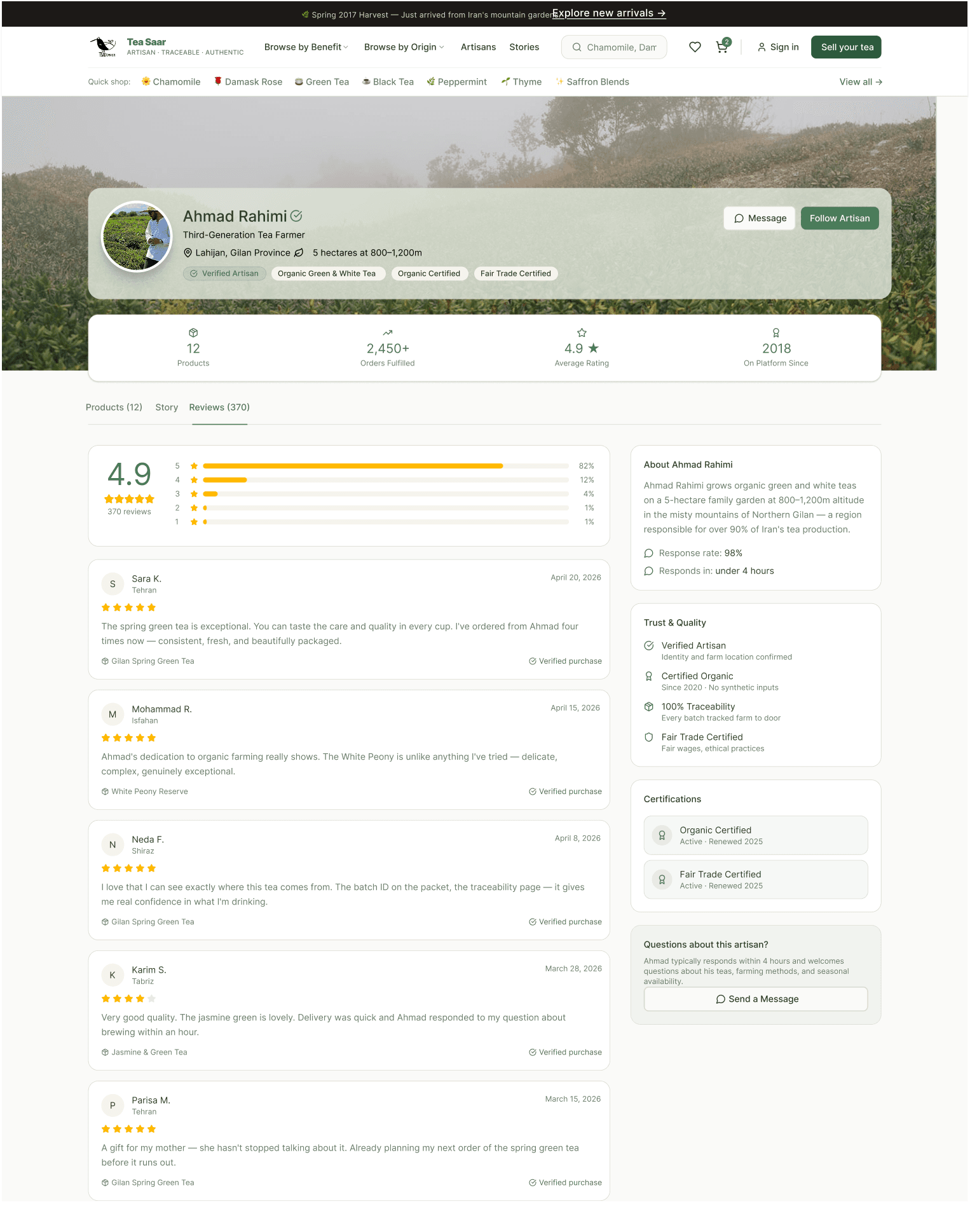
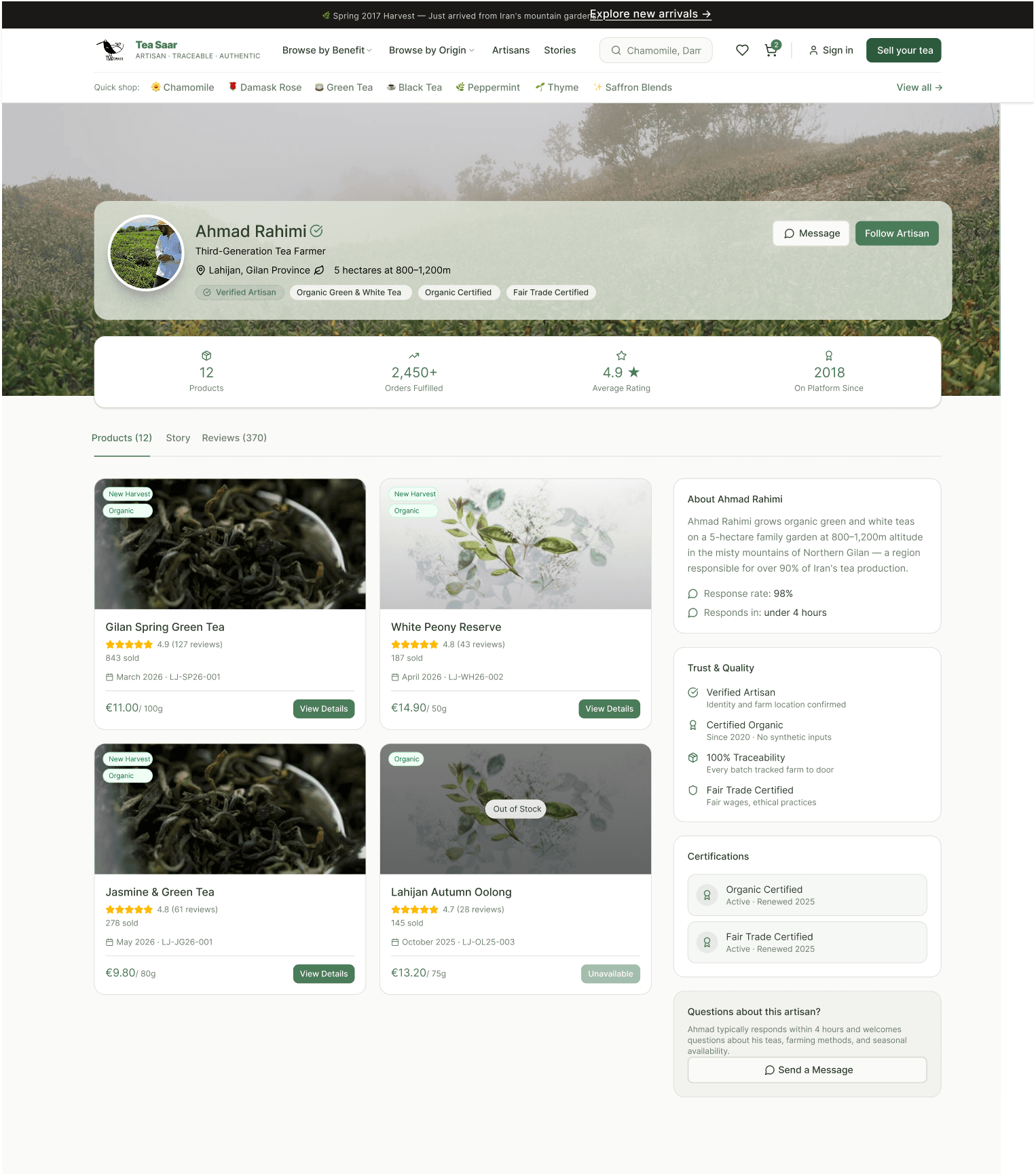
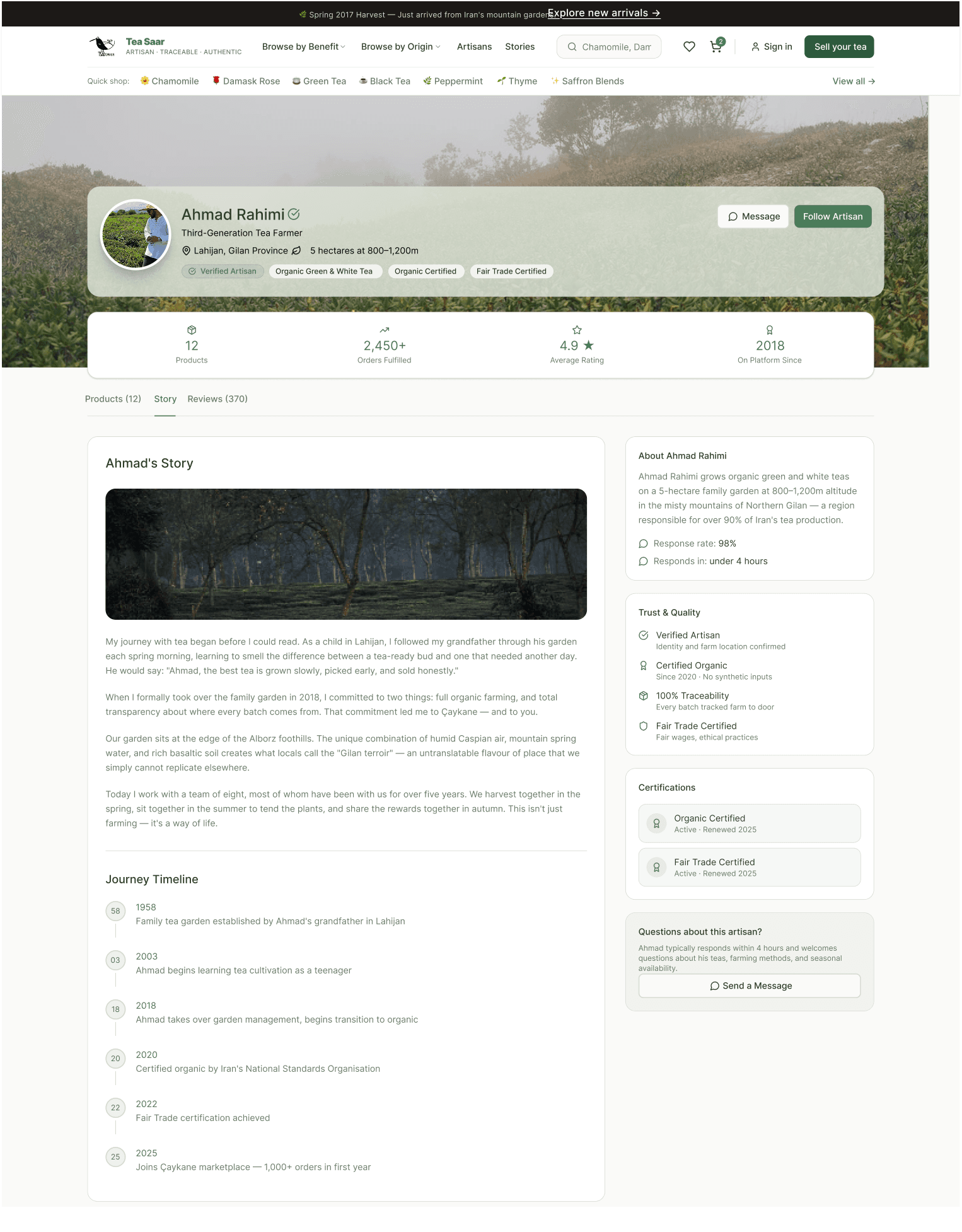
Story-driven product pages
Origin and harvest visibility
👉 Result:
Users understand what they’re buying and who they’re buying from
Seller Experience
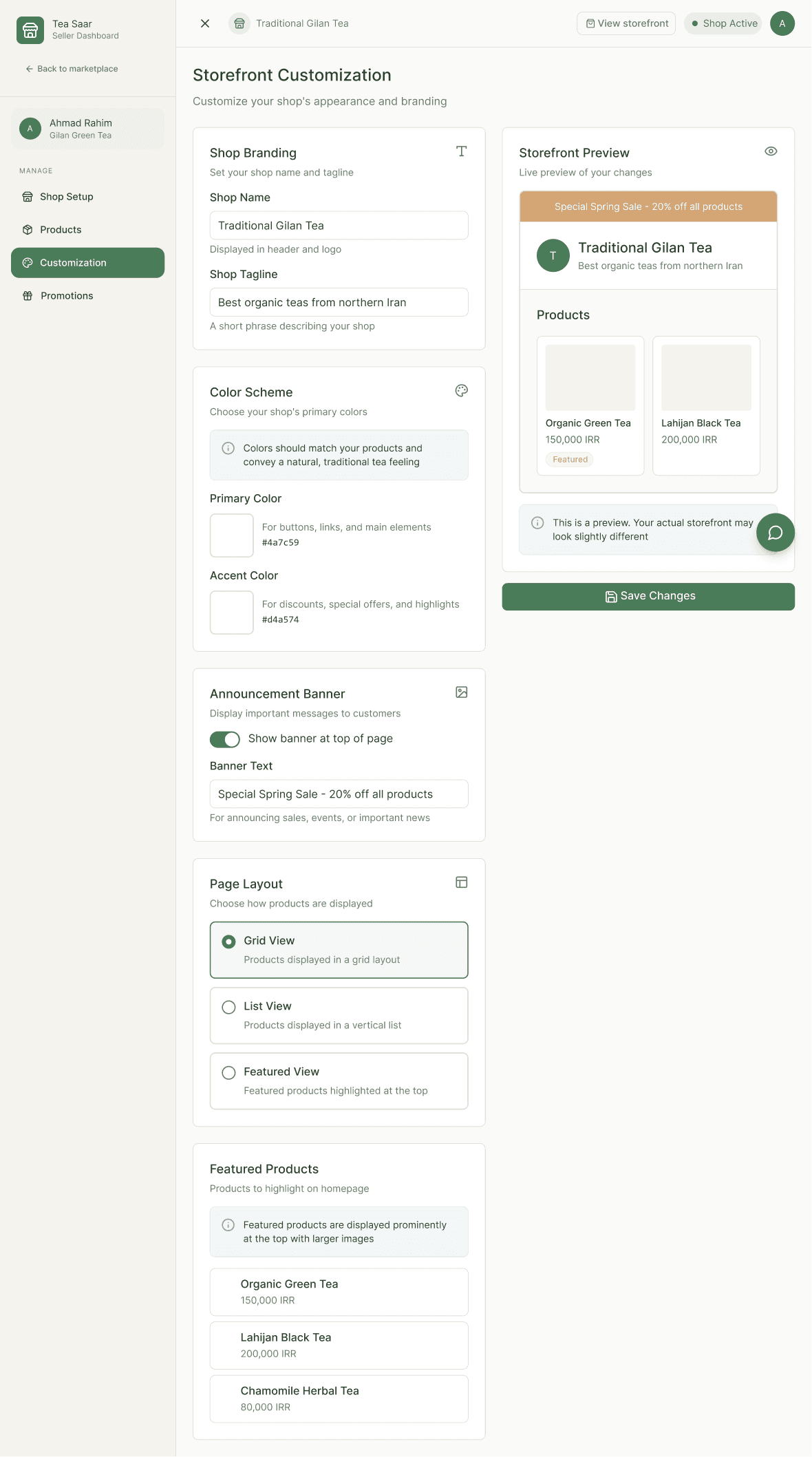
Goal: enable non-technical users
Key features:
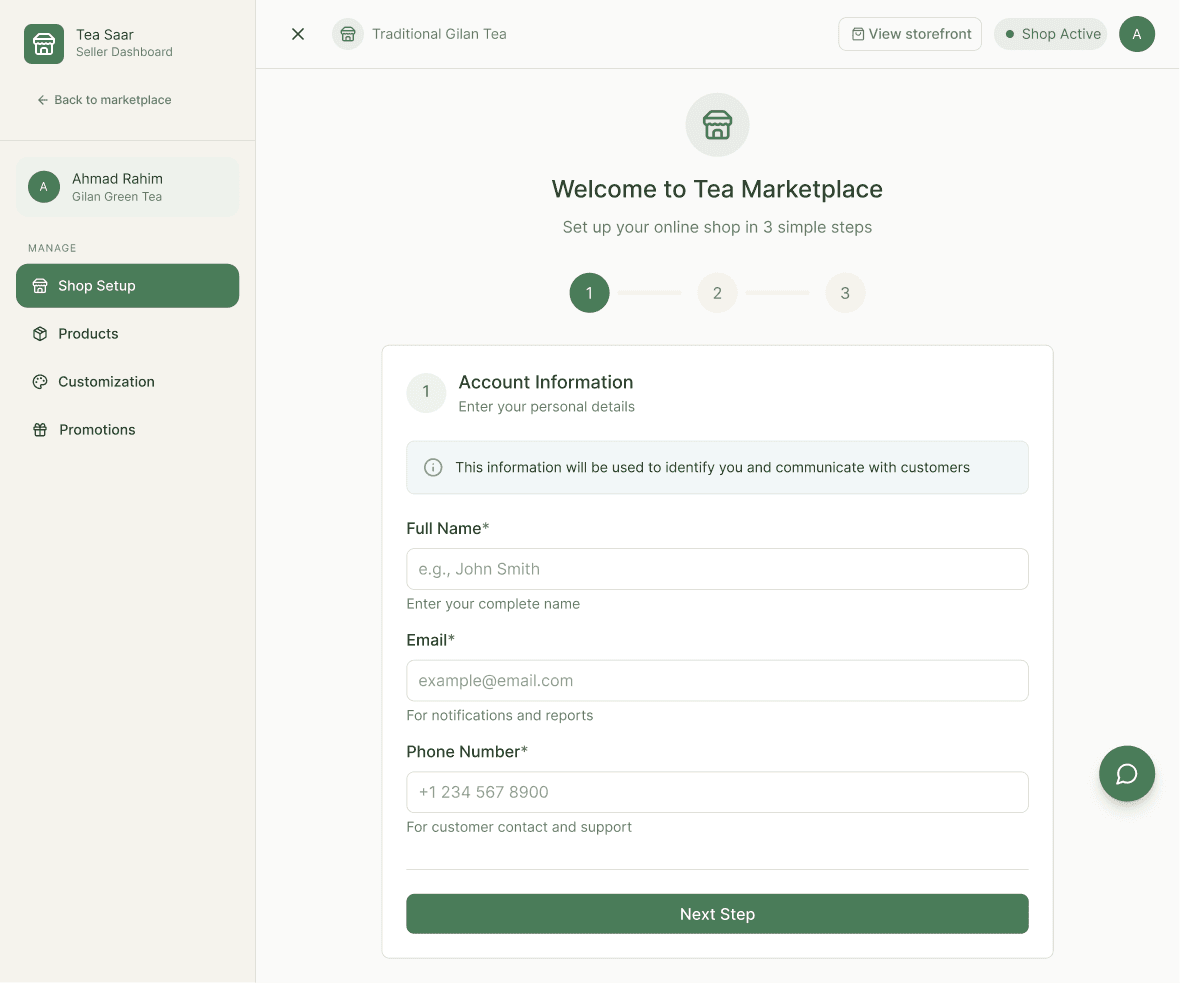
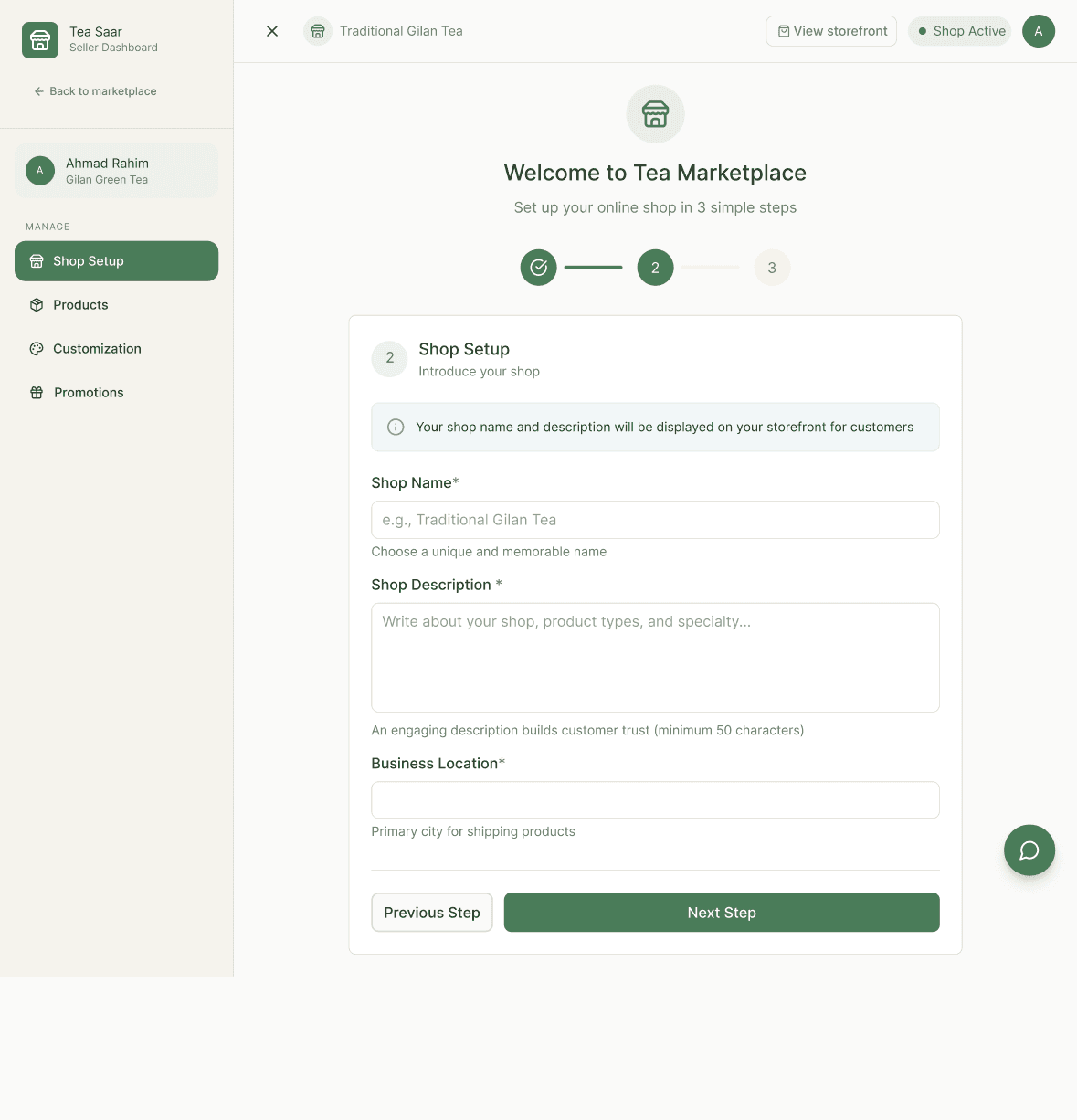
Guided onboarding
Simple product creation
Promotions & pricing tools
👉 Result:
Lower barrier to entry → faster supply growth
Icon are from icons8.com & streamlinehq. Mix & Mach library from Lucian popovici.
Product Snapshot
We built a two-sided marketplace for herbal tea sellers in Iran, enabling non-technical herbal tea sellers to easily sell online, inspired by the Iranian bazaar (Raaste) system.
By simplifying onboarding and embedding traceability (origin, farmer, harvest) into the core UX, we:
Onboarded 200+ artisan sellers
Achieved 65%+ onboarding completion
Reduced onboarding time by ~30%
Increased engagement on traceable products
Strategy
We focused on three pillars:
1. Familiarity over novelty
Use the Raaste concept for navigation and discovery
2. Guidance over flexibility
Design for non-technical users → reduce decision complexity
3. Trust over scale
Make origin, farmer, and harvest visible everywhere

Impact
200+ sellers onboarded across multiple regions
Repeat seller activity established
Traceability validated as key differentiator
Improved onboarding and product creation flows
What We Learned
1. Simplicity drives adoption
Non-technical users don’t need flexibility—they need clarity
2. Trust beats features
Origin and story mattered more than pricing tools
3. Guidance > dashboards
Insights are more valuable than raw data
Artifacts
Key Design Decisions
1. Simplifying onboarding for non-technical sellers
Solution:
Step-by-step onboarding
Plain language (no technical terms)
Progressive disclosure
Decision 01
Problem:
Sellers dropped off during setup due to complexity
Outcome:
65%+ completion rate
Onboarding time reduced by ~30%
Making traceability the core experience
Solution:
Every product includes:
Farmer identity
Region
Harvest batch
Decision 02
Problem:
Generic product listings lacked trust
Outcome:
Higher engagement
Increased perceived quality
Differentiation vs generic marketplaces
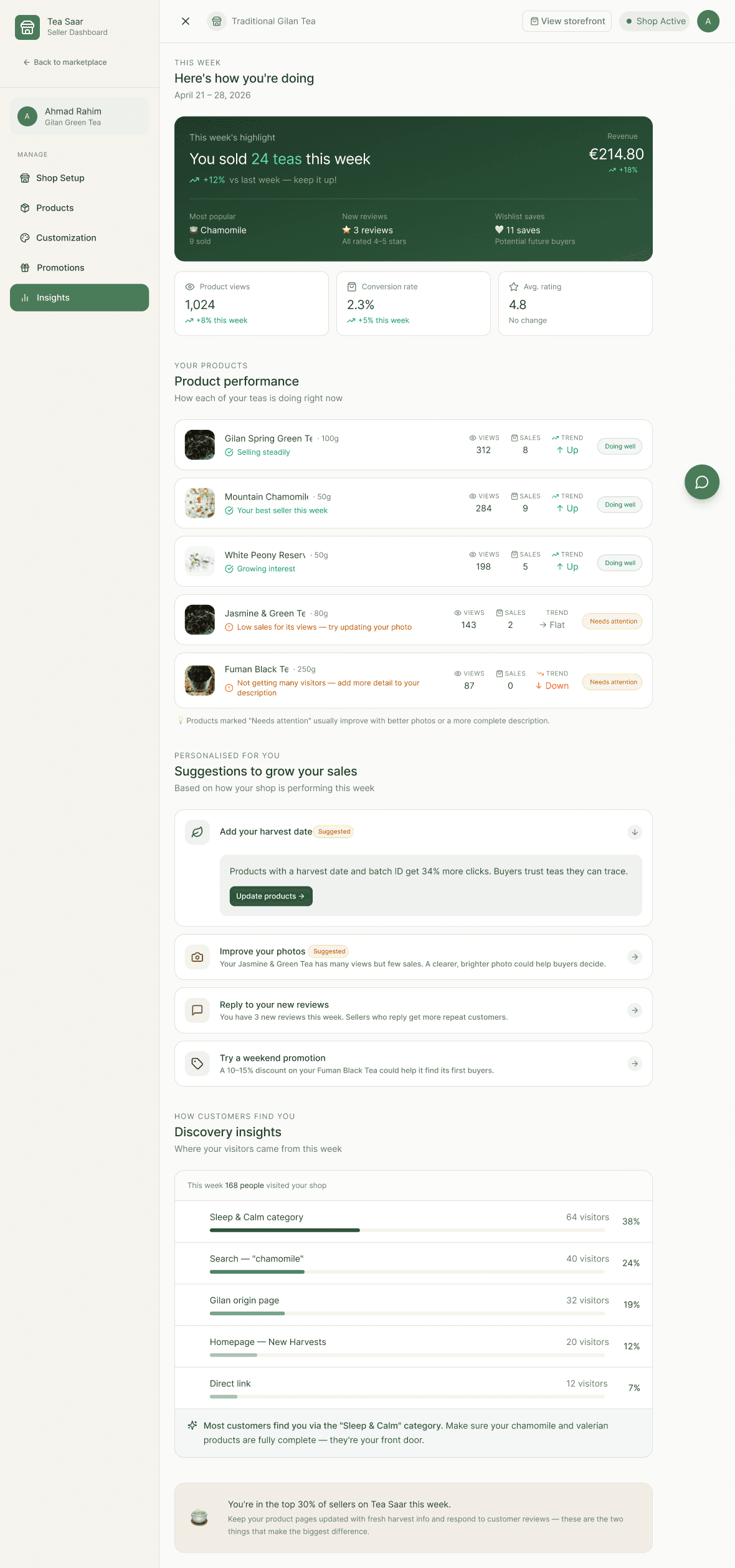
Simplifying performance insights (without complex analytics)
Solution:
Tracked a minimal set of key signals (views, sales, traffic source)
Translated them into simple, human-readable insights
Embedded guidance directly into the interface
Decision 03
Problem:
Sellers needed visibility into performance, but traditional analytics dashboards proved too complex for non-technical users, creating friction instead of value.
Outcome:
Sellers could understand performance instantly without training
Increased engagement with the dashboard
Faster decision-making (pricing, content, promotions)
Maintained a simple, accessible product aligned with user capabilities
Role:Lead Product Designer & Co-founder
Scope: 0 → product, customer + seller experiences, research, UX, product strategy
Next case study
FinGuru__ A gamified budgeting app